The Rise and Fall of Gagnon
Gagnon, Quebec, holds a unique and haunting place in the annals of Canadian history. It is a ghost town that did not simply fade away; it was systematically deleted. In the lexicon of abandoned places, we usually imagine rotting floorboards, hollowed-out windows, and windswept debris left behind by a slow exodus. Gagnon is different. When it ceased to be profitable, it was not abandoned to the elements. It was intentionally dismantled, bulldozed, and wiped off the map.
A Modern Oasis in the Wilderness
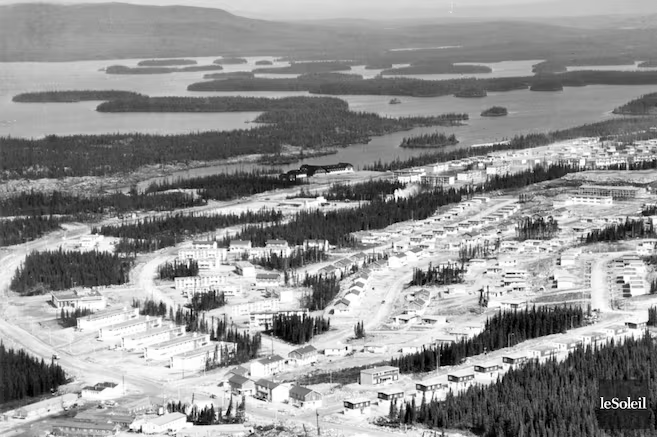
In the beginning, Gagnon was a miracle of modern engineering carved out of the dense spruce forest, 300 kilometers north of Baie-Comeau. Established in 1960 by the Québec Cartier Mining Company (QCM), the town was named for Onésime Gagnon, Quebec’s first Minister of Mines. It was built with a singular purpose: to house the workforce for the massive Lac Jeannine iron ore mine.
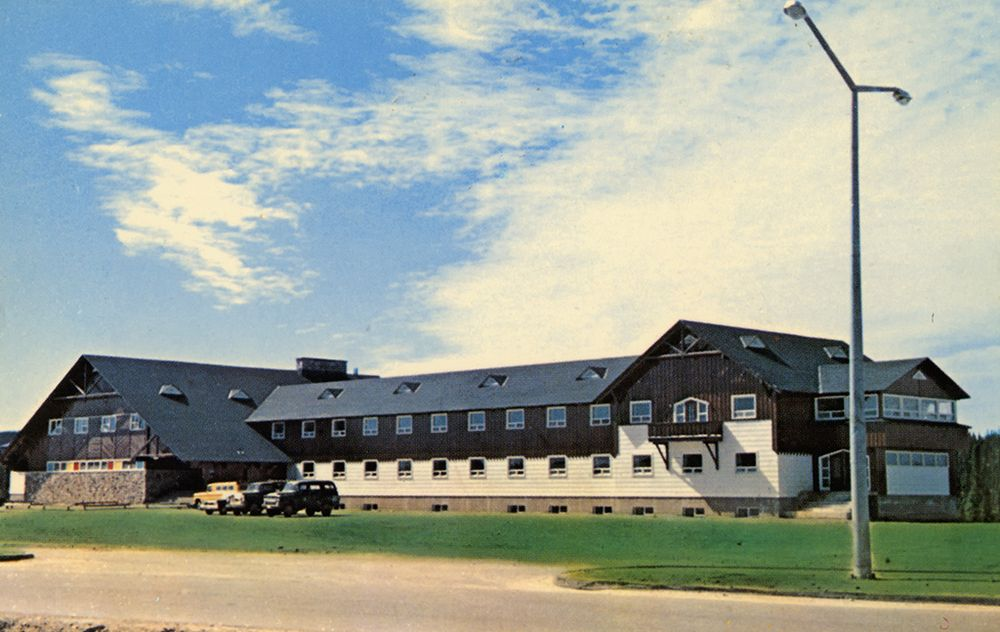
But Gagnon was never intended to be a rough-and-tumble frontier camp. To lure workers into the isolation of the sub-arctic shield, the company constructed a “model town.” At its zenith, nearly 4,000 people called Gagnon home, enjoying a standard of living that rivaled major urban centers. It was a fully realized municipality featuring a hospital, an arena, churches, a comprehensive high school, and a bustling shopping center anchored by a Hudson’s Bay and a Provigo. An airport offered direct jet service to Montreal and Quebec City, bridging the gap between the wilderness and the wider world.
For two decades, life in Gagnon was idyllic. Former residents describe a community bound by a unique social glue; because everyone worked for the same entity and lived in the same isolation, the neighbors were more like family. It was a prosperous, tight-knit bubble of civilization in the middle of nowhere.
The Iron Pulse: Lac Jeannine and Fire Lake
The town’s heart beat in rhythm with the extraction of ore. From 1961 to 1977, the economy was fueled by the Lac Jeannine open-pit mine located just near the town. When that deposit was finally exhausted, the town was given a second lease on life. Operations shifted to Fire Lake, a new site located about 85 kilometers northeast.
From 1977 to 1984, ore from Fire Lake was transported by rail back to the Lac Jeannine concentrator for processing. While this kept the lights on in Gagnon, it introduced a fatal flaw: the increased cost of transportation made the operation more expensive to run, leaving the town vulnerable to the whims of the global market.
The Collapse
The death blow came in the early 1980s, delivered not by a disaster at the mine, but by a crisis in the global economy. The steel industry entered a severe recession, causing the demand for iron ore to plummet and prices to crash.
By 1984, the math no longer worked. The high costs of the Fire Lake logistics, combined with the aging infrastructure of the Lac Jeannine plant, made the operation unsustainable. The mines were hemorrhaging money. In October 1984, the mining consortium, Sidbec-Normines, made the announcement that would seal the town’s fate: operations would cease completely.
The Great Undoing
When a mine closes, a company usually boards up the windows and walks away. However, QCM did not want the liability of a decaying ghost town, nor did they want a squatter settlement taking root on their tenure. They chose a radical path: the repatriation of the land to nature.
The summer of 1985 was the season of the great undoing. Residents were given a deadline to pack their lives and leave. Unlike the slow decline of other boomtowns, Gagnon’s end was violent and swift. Heavy machinery rolled down the manicured streets, tearing down the schools, the church, the hospital, and the arena. Homes were not just emptied; they were flattened.
The debris was buried or hauled away. The sewers and electrical grids were dug up or sealed in concrete. Homeowners were compensated—often receiving fair market value, a rarity in such circumstances—but the psychological toll was heavy. They were paid to watch their community be physically erased from the earth.
The Phantom Grid
If you drive along Route 389 today, you will encounter a surreal landscape that defies logic. You do not find a town of empty houses, but rather a phantom grid.
The highway suddenly and inexplicably widens into a divided boulevard, complete with a median and curbs, running through the silent wilderness. This was once Rue 1, Gagnon’s commercial spine. If you look closely into the encroaching forest, you can still see the remnants of sidewalks leading to nowhere, the ghostly driveways where families once parked their cars.
The old airport runway remains, occasionally used for emergency landings, a strip of asphalt waiting for planes that rarely come. But the most poignant remnant is the cemetery. It was one of the few things left intact, maintained to this day as a silent testament to the people who were born, lived, and died in the city that vanished.
In a final twist of irony, the mining industry eventually returned. In 2006, ArcelorMittal reopened the Fire Lake mine. But the town of Gagnon was never rebuilt. The era of the “model town” was over, replaced by the modern efficiency of “Fly-in, Fly-out” operations. Gagnon remains a memory—a lost paradise remembered fondly by its exiled children, leaving behind only a wide road and a graveyard in the trees.